Attic mold removal in Jacksonville costs $1,000–$4,000 for most homes: sheathing planes treated, insulation triaged, and the causes corrected: storm intrusions, attic-AC condensation, and ventilation that can't purge First Coast humidity. Caught early, the roof deck stays a roof deck.
How attic colonies start here, the treatment scope, and the resale math that makes early action cheap.
Three feeders, one dark room
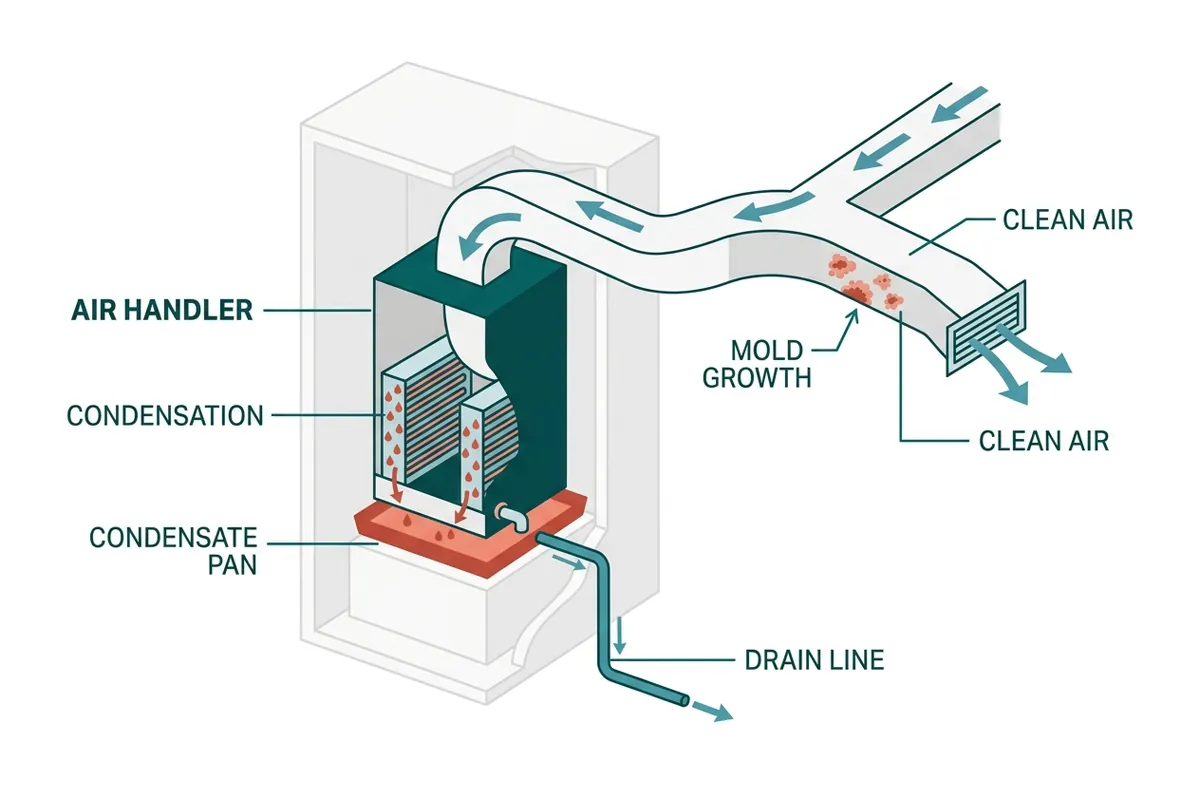
Jacksonville attics collect all three of mold's local suppliers. Storm water: tropical-season intrusions wet sheathing quietly (a lifted shingle line, a flashing gap) and the shadow starts at the leak and follows the moisture. The machine: attic-mounted air handlers and duct runs sweat in the heat, raining condensation onto insulation and panels below. The air itself: ventilation that can't move the coast's humid load leaves the attic marinating, especially over blocked soffits. Sheathing takes the growth first; structure pays if it runs unwatched.
The scope, plane by plane
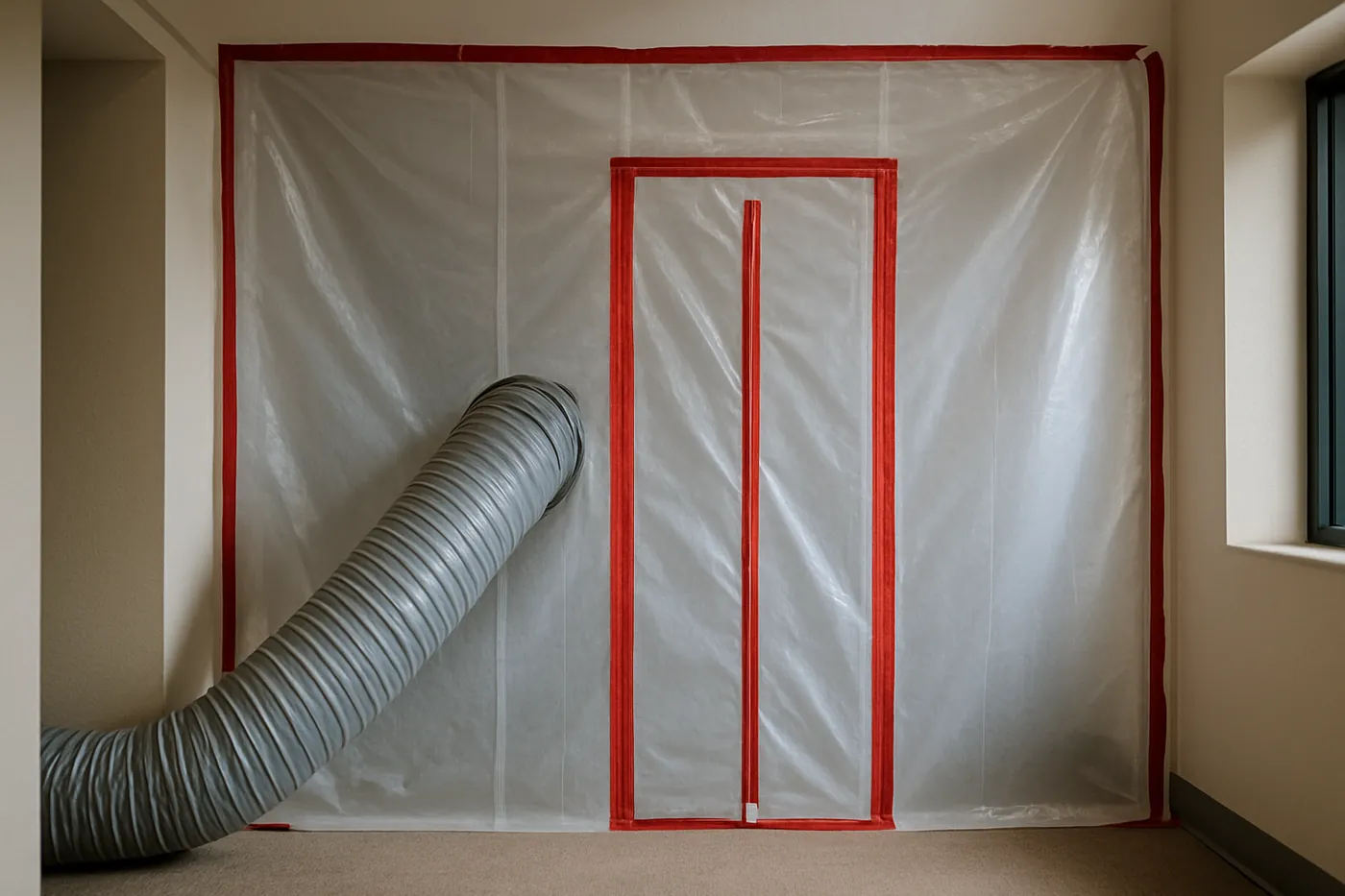
- Map and photograph: every affected panel documented, moisture sources named
- Treat the sheathing: growth removed and surfaces treated across affected planes; softened panels flagged honestly
- Triage insulation: colonized or soaked batts out, clean material left in place
- Fix the feeders: intrusion named for repair, attic-unit condensation corrected, ventilation paths restored
- Document the after: the photo file that answers every future inspector
The resale math
Attic sheathing is a standard First Coast inspection stop, and shadowed panels are a negotiation looking for a number, usually a bigger one than the remediation would have cost. Treated, documented, cause-corrected attics close conversations instead of opening them. Like everything on this site, early is the discount: the inspection can read your attic, photos included, before storm season writes anything new.
Attic mold in a hot-roof town: ventilation, ducts, and the black sheathing tell
Jacksonville attics run brutal (roof deck temperatures far above ambient all summer) and paradoxically that heat is what makes their mold pattern so readable. Uniform dark staining across the sheathing usually means a ventilation failure: humid air entering faster than the ridge and soffits can flush it, condensing wherever the deck cools overnight. Localized blooms tell different stories: a duct leak blowing conditioned air against hot framing (condensation stripe), a slow roof penetration leak (stain radiating from a point), bath fans venting into the attic instead of through the roof (bloom above the bathroom). The pattern is the diagnosis; treatment without reading it is redecorating.
A sound attic scope pairs removal (HEPA vacuuming, treatment, sealing where specified) with the correction the pattern named: venting the bath fan out, sealing the duct, fixing the flashing, opening the soffit path. Ask for it priced separately, so you can see that the correction line is usually the cheaper half and always the half that makes the removal permanent.
What put the mold up there?
Jacksonville attics are listed first among the usual colonies for a reason: summer heat, duct condensation and storm-tested roofs meet in the one space nobody looks at.
| Situation | What it means | The local version |
|---|---|---|
| A roof penetration | Staining tracks a fastener, a valley, or one flashing | After each storm season, staining that tracks one fastener line is the common find |
| Sweating ductwork | Growth clusters along duct runs in a hot attic | AC closets and attic duct runs sweat in the midsummer humidity peak |
| Blocked intake vents | An even dusting across the sheathing, worst at the eaves | Blown insulation drifted against the soffits is the quiet, even-dusting version |
| A storm-opened envelope | One bay, datable to a storm or a fallen limb | Tropical systems open envelopes: the one-bay pattern with a date attached |
An attic check costs minutes during any inspection and catches this while it is still a ventilation adjustment rather than a removal job.
Attic mold questions, straight answers
What does attic mold removal cost in Jacksonville?
Most attic remediations run $1,000-$4,000: sheathing treatment across the affected planes, insulation triage, and the ventilation or AC-unit corrections that caused it. Roof-intrusion repairs price separately and get named plainly.
How does a Florida attic grow mold?
Three feeders: roof intrusions after storm season (the classic), attic AC units and ducts sweating in the heat, and ventilation that can't purge the coast's humid air. Sheathing takes the growth first (gray-black shadowing along the panels) and the roof deck pays if it runs.
Will attic mold reach the living space?
Less directly than AC-path mold, but attics leak air downward more than owners think, and attic-mounted air handlers can pull attic air into the system. It also meets you at resale: attic sheathing is a standard inspection stop, and shadowed panels negotiate poorly.
Can stained sheathing be saved?
Usually. Surface-colonized sheathing cleans and treats well; panels with structural softening get flagged honestly for replacement. The difference is a probe, not a guess, and photos should document every panel's call.
What stops it from returning?
The cause list, worked: intrusion repaired, attic AC condensation corrected, ventilation actually moving air (soffit-to-ridge paths clear, fans functioning). Ask for the corrections in the scope: treated sheathing under an unfixed cause is a two-year warranty on the problem.
Book a Jacksonville mold inspection
Tell us what you're seeing (spots on a wall, a musty room, a leak that got away) and a local specialist will call you back to arrange an inspection. If water is coming in right now, call (904) 659-2402.