Water damage restoration in Jacksonville runs from $1,000–$3,000 for contained events to substantially more for storm intrusions with demolition. On the First Coast the governing fact is the clock: wetted materials start growing within days, and response speed decides the drying-versus-demolition line.
The 72-hour reality, the restoration sequence, and the paper trail that makes claims move.
The 72-hour reality
Warm, humid interiors are incubators: drywall, insulation, and carpet pad that stay wet past two or three days start colonizing, and the job changes from drying to removal. That's the entire economics of storm response here. The same soaked room costs thousands less inside the window than out of it. When tropical weather runs through, a good crew runs accordingly: extraction and air movement first, documentation in parallel, triage honest from hour one.
The sequence
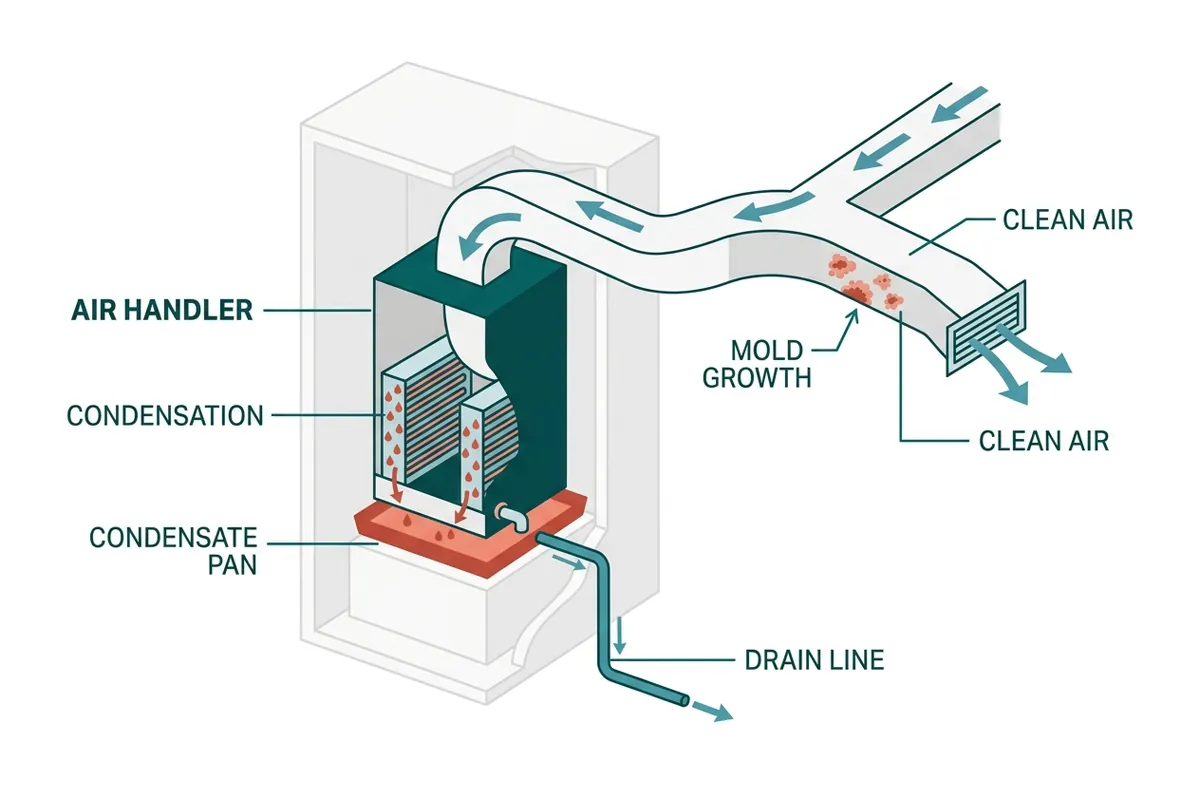
- Stop and map: the source controlled, moisture mapped with meters, everything photographed for the file
- Extract and move air: standing water out, drying equipment placed to readings, not vibes
- Triage honestly: savable materials dried to spec; past-window materials removed before they seed the house
- Treat and clear: affected surfaces treated, clearance documented, remediation engaged where growth got there first
- Name the intrusion: the flashing, window, or roof line that let the storm in, identified for repair
Claims that move
Storm claims live or die on documentation, so ask for it built in: moisture maps at arrival and through drying, photo logs by room, itemized scopes in adjuster-legible form, drying records to industry standards. Ask to get the file as it is built. The version of this work where the homeowner isn't the messenger between two parties who each want more paper.
The 48-hour clock, Florida edition
Everywhere, mold follows water in about 24 to 48 hours. In Jacksonville the clock runs faster and the stakes run higher: ambient humidity means wet materials dry slower on their own, and summer temperatures sit in mold's preferred range around the clock. So water-damage response here is a race with two lanes: extraction and drying in the first lane (pumps, air movers, dehumidifiers, moisture-mapped daily until materials hit dry standard), and prevention in the second (antimicrobial treatment of exposed framing, removal of materials that crossed the line before the crew arrived). Losing the race converts a drying bill into a remediation bill.
Storm season adds the insurance layer: carriers distinguish sharply between sudden water (burst supply line, storm intrusion, commonly covered) and long-term seepage (commonly excluded), and the documentation from the first 48 hours often decides which bucket your claim lands in. Ask for the job to be moisture-mapped and photo-logged from the first visit with that paper trail in mind. A specialist doesn't practice insurance; the point is that your adjuster has evidence instead of estimates.
What has to happen in the first 48 hours?
Jacksonville water damage clusters around the summer storm season, when a roof opened by an afternoon thunderstorm meets humidity that will not let anything dry unaided.
| Situation | What it means | How it goes in this market |
|---|---|---|
| Stop and extract | The source closed and standing water out the same day | Storm water first: the envelope closed, then extraction, in that order |
| Dry to a standard | Monitored drying against readings from unaffected material | Midsummer humidity peaks mean mechanical drying or no drying at all |
| Remove what stayed wet | Saturated porous materials out before they colonise | Attics and AC closets are the usual first colonies. Check both even for a floor leak |
| Verify before rebuild | Moisture readings decide closure. Never the calendar | Slab-on-grade hides nothing below: readings at the wall base decide closure |
The 48-hour window is the whole economics of this trade: inside it you pay for drying, past it you pay for drying plus removal plus rebuild.
Water damage questions, straight answers
What does water damage restoration cost in Jacksonville?
Scope-driven: a contained supply-line event with fast drying might run $1,000-$3,000; storm intrusions with demolition and rebuild-prep run well beyond. What matters in every case: the honest line between what drying saves and what demolition owes, documented for the adjuster.
How fast does mold follow water here?
Days: warm First Coast interiors put wetted drywall and insulation on a 48-to-72-hour clock. Fast drying inside that window saves materials; past it, removal becomes the honest call. It's why storm-season response should put speed ahead of paperwork order.
Does the work support insurance claims?
It should. Post-storm work runs on documentation: moisture maps, photo logs, drying records, scope itemization in adjuster-legible form. Ask for the file to be built as the work goes, so you and your adjuster get the same clean trail.
Storm water versus pipe water: does the source change the job?
Category matters: clean supply-line water dries generously; storm intrusion and ground water carry contamination that changes what's savable and how surfaces get treated. The source sets the protocol, and the protocol is written into the scope.
What happens after the work is done?
You're rebuild-ready: structure dried to readings, unsalvageable materials removed, surfaces treated, clearance documented, and the intrusion that let the water in named for repair so the next storm meets a fixed house.
Book a Jacksonville mold inspection
Tell us what you're seeing (spots on a wall, a musty room, a leak that got away) and a local specialist will call you back to arrange an inspection. If water is coming in right now, call (904) 659-2402.